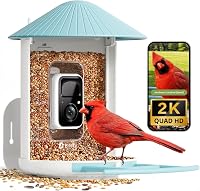
Birdfy vs FeatherSnap Smart Bird Feeder: Which Is Better? (October 2026)
Choose Birdfy for lifetime free AI identification and 30-day cloud clips; choose FeatherSnap for seed bags, a removable camera and a wide-angle view. Both feeders have solar-powered roofs and 1080P cameras, but their app features and care routines differ.
On this page (9 sections)
- Birdfy vs FeatherSnap: which features matter most?
- How do Birdfy and FeatherSnap cameras frame birds?
- Which app gives you the bird information you want?
- How do storage and subscription costs compare?
- Which feeder is easier to mount, refill and clean?
- What should you know about solar power and weather?
- How can you set up either feeder for dependable use?
- What common mistakes should you avoid?
- Birdfy vs FeatherSnap: which one should you buy?
Birdfy vs FeatherSnap comes down to the app features and upkeep you want. Birdfy is the stronger match for free cloud clips and lifetime free AI identification, while FeatherSnap suits buyers who want seed included and a camera they can remove easily.
Both feeders pair a solar-powered roof with 1080P video and app alerts. Birdfy adds 60FPS capture and full-color night vision; FeatherSnap offers a 120° lens and infrared night vision.
This comparison focuses on the differences that affect daily bird watching: camera view, identification, clips, mounting and cleaning. For a wider shortlist, see our best smart bird feeders with cameras.


Birdfy vs FeatherSnap: which features matter most?
Choose Birdfy for lifetime free AI identification and cloud clips; choose FeatherSnap for included seed and easy camera removal. Those are the clearest differences between these solar camera feeders.
Birdfy’s side-mounted camera is positioned for close-range viewing, and its high-frame-rate mode captures fast movement at 60 frames per second. FeatherSnap pairs a wide-angle view with infrared night vision.
For storage, Birdfy includes free cloud storage with 30-day video retention. FeatherSnap includes one month of Premium, then requires a paid plan for its full set of subscription features.
Start with the feature you expect to use most. A wider view and easy camera access may matter more than slow-motion clips, while free video retention may matter more than having seed in the box.
How do Birdfy and FeatherSnap cameras frame birds?
Birdfy emphasizes close-up side-view footage and slow-motion playback; FeatherSnap emphasizes a 120° view and night capture. Both provide 1080P video.
Birdfy’s 60FPS high-frame-rate mode is intended to show wing flaps, takeoffs and other quick movements in greater detail when you slow the footage afterward. Its camera sits on the side of the feeder to bring perched and feeding birds close to the frame.
FeatherSnap’s lens covers a 120° viewing angle. It has infrared night vision, while Birdfy offers full-color night vision.
Neither camera choice works best in every yard. A close side view can keep a feeding bird prominent, while a wide-angle view may include more of the area around the feeder.
Is Birdfy 60FPS or FeatherSnap’s wide-angle view a better fit?
Choose Birdfy’s 60FPS mode to slow down fast bird action; choose FeatherSnap’s wide-angle lens when you want more of the area around the feeder in frame. These features serve different viewing goals.
The 60FPS mode is specific to Birdfy, while FeatherSnap’s lens is 120°. The camera’s angle and the space around the perch also affect what appears in your videos.
Branches, fences and nearby structures can block the view or make birds look small. Use our guide to placing a bird feeder camera to pick a spot with a clear view and safe access.
Which app gives you the bird information you want?
Birdfy includes lifetime free AI bird identification; FeatherSnap combines AI identification with a Bird Book and a Premium plan. Consider which app features you’ll use after the initial setup.
Birdfy’s AI identifies species and includes details such as whether a bird is juvenile, male or female. Bird Data tracks repeat visits, activity trends and seasonal changes, while personalized alerts help you follow selected birds.
FeatherSnap’s AI identifies species and logs visitors in a personal Bird Book. Its included Premium month also covers video downloads, weekly Snap Wrap highlights, fun facts, trivia and community sharing.
After that month, using FeatherSnap’s Premium features requires a paid plan. Birdfy’s AI identification is described as lifetime free, which suits people who want that feature without a recurring subscription.
App alerts depend on a suitable connection at the feeder. Read how Wi-Fi works with smart bird feeders before settling on a mounting location.
How do storage and subscription costs compare?
Birdfy includes 30-day cloud video retention; FeatherSnap includes one month of Premium before its paid plan begins. Compare the features you’ll want to keep using after setup.
With Birdfy, recent clips remain available in cloud storage for 30 days, giving you time to revisit or download favorites. There’s no separate charge specified for that storage.
FeatherSnap’s first month of Premium is included. Afterward, Premium costs 59.99 dollars per year or 6.99 dollars per month, and includes features such as the Bird Book, downloads, Snap Wrap highlights and community sharing.
The plans don’t describe identical storage terms. If you mainly want to review recent clips without a stated storage subscription, Birdfy has the clearer fit; if you want FeatherSnap’s full app set, account for its ongoing Premium cost.
For another view of app and clip options, see our Wi-Fi bird feeder camera guide.
Which feeder is easier to mount, refill and clean?
Birdfy offers wall, pole and tree mounting with tool-free cleaning; FeatherSnap’s bracket supports trees, fences, poles or flat surfaces, and its camera removes without tools. Choose the arrangement that gives you easy access for refills and care.
Birdfy measures 8 x 10 x 9 in and holds 1.3 liters. Its tool-free cleaning design lets you open and refresh the feeder without complicated disassembly.
FeatherSnap measures 12 x 9.6 x 14.4 in and holds 2 liters. Its camera module slides out for cleaning, storage or connectivity troubleshooting, so you can access the camera without taking down the whole feeder.
FeatherSnap includes two seed bags, so you have seed available to start. Birdfy’s box includes the feeder, camera, brackets, perch, charging cable, drilling template, manual and hardware.
Which mounting point fits Birdfy or FeatherSnap?
Birdfy fits yards with a wall, pole or tree mounting point; FeatherSnap also supports fence posts and flat surfaces. Check the support and camera view before you install either feeder.
Birdfy’s natural fir wood suits a yard where you prefer a wood feeder. FeatherSnap is green and made from UV-resistant plastic.
FeatherSnap’s universal bracket can be useful if you have a suitable tree or fence and don’t want to add a pole. Birdfy also supports tree mounting, along with wall and pole options.
Leave enough space to reach the feeder safely for refills and cleaning. A spot that’s hard to reach can make routine care less likely.
What should you know about solar power and weather?
Both feeders use a solar panel integrated into the roof, but Birdfy gives a battery capacity and camera rating while FeatherSnap describes its materials and year-round charging. Solar can reduce routine charging, but performance still depends on placement and light.
Birdfy pairs its built-in panel with a 5200mAh rechargeable battery. Its camera is IP66-rated for protection against dust and rain.
FeatherSnap’s roof panel charges the included lithium-ion battery, and its UV-resistant plastic is designed for outdoor conditions. No battery capacity or IP rating is specified.
Choose a location with a useful camera view and suitable sunlight. For more help weighing the power setup, see our solar and non-solar smart bird feeder comparison.
How can you set up either feeder for dependable use?
Pick the mounting spot before filling the feeder, then check the camera view, Wi-Fi and access for cleaning. A little planning helps you avoid moving a full feeder or losing clips to a weak connection.
First, choose a wall, pole, tree or fence location that you can reach safely. Consider where birds are likely to perch and whether nearby branches or structures will block the view.
Next, check that Wi-Fi reaches the spot and that you can open the app there. Birdfy specifies a stable 2.4GHz Wi-Fi connection; both feeders use connected apps and phone alerts.
Then install the feeder according to its included instructions, add seed and confirm that the camera view and alerts work from your usual viewing location. Give the feeder time to attract visits rather than moving it repeatedly after a quiet first day.
What common mistakes should you avoid?
Avoid choosing by camera resolution alone, mounting where the connection is weak, or assuming every feature stays free. Each can lead to a feeder that doesn’t match how you plan to use it.
A 1080P label doesn’t tell you whether a close side view or a wide-angle frame suits your yard. Think about the perch and background you want to see, then choose Birdfy or FeatherSnap based on that view.
Don’t assume the solar panel eliminates every charging concern. Sunlight and placement affect solar charging, and FeatherSnap’s detailed battery capacity isn’t specified.
Finally, check the app features you care about. Birdfy includes free cloud storage with 30-day retention, while FeatherSnap Premium has a paid plan after the included month.
Birdfy vs FeatherSnap: which one should you buy?
Choose Birdfy if free cloud clips, lifetime free AI identification and 60FPS capture lead your list; choose FeatherSnap if removable-camera care, a wide-angle view and included seed fit better. Both offer solar-powered roofs and 1080P cameras, so decide by the features you’ll use most.
Birdfy is the better match if you want motion detail and recent clips available for a month without a stated storage subscription. FeatherSnap makes more sense if you want to remove the camera for cleaning or troubleshooting and value seed in the box.
If you’re still comparing camera styles, browse Bird Buddy alternatives or our guide to 2K vs 4K bird feeder cameras. Those comparisons can help you narrow down the camera features that matter in your yard.
Frequently asked questions
Which is better, Birdfy or FeatherSnap?
Birdfy is the stronger fit if you want lifetime free AI identification, free cloud storage with 30-day video retention and 60FPS motion capture. FeatherSnap suits you if included seed bags, a removable camera and a 120° lens matter more.
Both have solar power and 1080P video.
Do Birdfy and FeatherSnap need Wi-Fi?
Both use Wi-Fi-connected apps and phone alerts, so plan for a reliable connection where the feeder will hang. Birdfy specifies a stable 2.4GHz Wi-Fi connection.
See our guide to whether smart bird feeders need Wi-Fi before choosing a mounting spot.
Does Birdfy or FeatherSnap include free video storage?
Birdfy includes free cloud storage with a 30-day video retention period. FeatherSnap includes one month of Premium, which covers video downloads and other features; a paid Premium plan is needed after that month for the full experience.
Can you remove the FeatherSnap camera for cleaning?
Yes. FeatherSnap's camera module slides out without tools, so you can remove it for cleaning, storage or connectivity troubleshooting.
Birdfy instead describes tool-free cleaning for the feeder, and does not specify a removable camera module.
Which feeder is easier to mount?
Both offer several mounting options. Birdfy can mount on a wall, pole or tree, while FeatherSnap's universal bracket supports a tree, fence, pole or flat surface.
Check the mounting point and camera view before filling either feeder.